If the client is misled — you are responsible.
What the Law Says
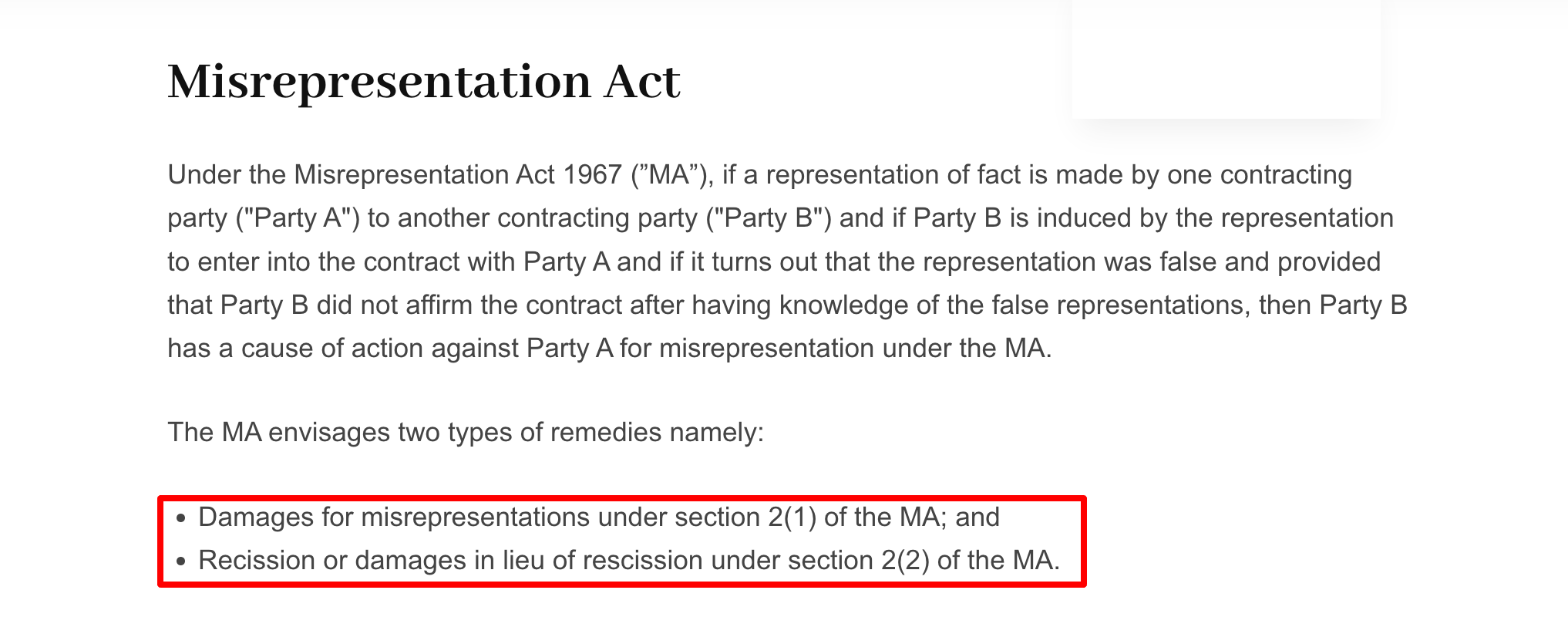
Under the Misrepresentation Act:
A false statement can be made:
- Verbally
- In writing
- By conduct
Even your behaviour can be a “statement”.
What Counts as Mis-selling
- Saying something that is false
- Giving incomplete or misleading information
- Creating the wrong impression intentionally
- Allowing the client to believe something untrue
If the client walks away with the wrong understanding — it is mis-selling.
Real Example
Mis-selling happens when you:
- Make promises you don’t intend to honour
- Say something you know is false
- Say something without verifying if it is true
- Use vague or ambiguous statements to “close the deal”
“I think can”, “should be ok”, “confirm no issue” — without verification = risk.
What This Means in Redbrick
- No guessing
- No overpromising
- No selective disclosure
- No pressure tactics
Clarity over closing. Accuracy over speed.
Consequences
- Client disputes and complaints
- Ops rejection and delays
- Regulatory breach
- Termination
If you cannot stand by your words, don’t say it.